By Holly Rohring (@heyitscounselorholly)
Starting this month, we’ll share questions from the Wendy Crafts community that are focused on our mental and emotional health — along with answers, advice, and guidance.
Below is our first question. We invite you to submit your own using the following form. Anonymous inquiries are welcome.
Dear Holly,
I have suffered with severe anxiety and panic attacks my entire life. It is truly a “hidden cross” and can bring shame and embarrassment. It is SO hard to hear, “Well, just get over it. Relax.” I’d love to hear more about coming to terms with anxiety, loving ourselves despite it, and believing we are NOT “broken.”
– Beth
Dear Beth,
First, I want to say this clearly: what you’re carrying is real- and it matters.
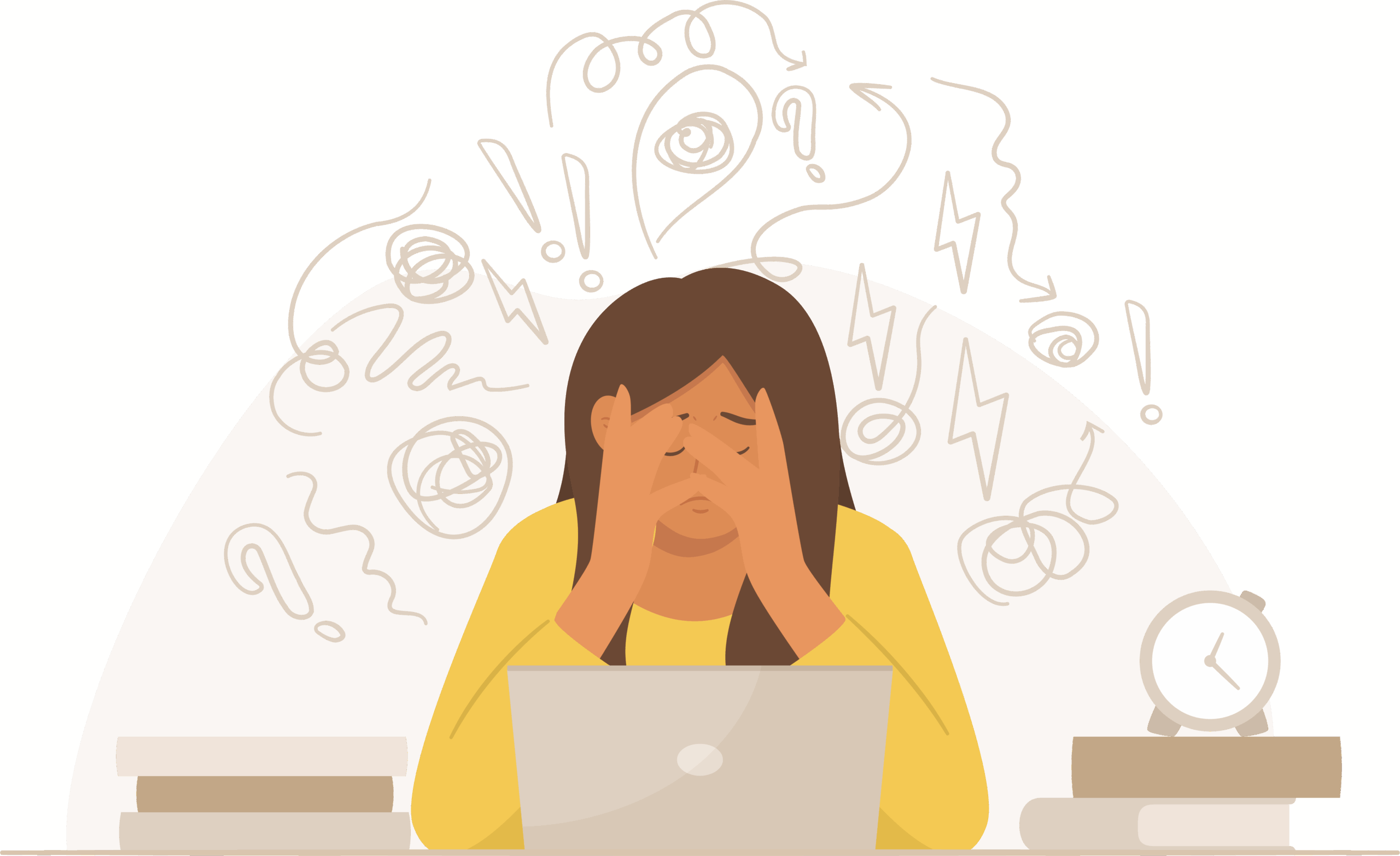
Anxiety and panic can feel like a hidden cross because so much of the suffering happens internally. On the outside, people may see someone functioning, smiling, showing up. On the inside, your body may feel hijacked- your chest tight, your heart racing, your thoughts spiraling. When that experience is met with comments like “Just relax” or “Get over it,” shame can quietly take root.
If it were that simple, you would have already done it.
One important thing to understand about panic attacks is that they are often not dangerous- even though they feel terrifying. Many times, a panic attack is the brain misinterpreting a normal or mildly uncomfortable sensation in the body and sounding a false alarm. A change in breathing, a flutter in the chest, lightheadedness, or tension can be read as threat, and suddenly the body shifts into full fight-or-flight mode.
That doesn’t mean you’re weak. It means your brain is trying- imperfectly- to protect you.
Anxiety, too, is rarely about something being “wrong” with you. More often, it has to do with what you’ve lived through, the environment you’ve had to adapt to, and the ways your nervous system learned to stay alert in order to cope. Over time, that vigilance can become exhausting- but it is learned, and learned patterns can change.
Coming to terms with anxiety doesn’t mean surrendering to it or defining yourself by it. It means learning to understand it without shame. It means shifting from “How do I make this go away?” to “How do I live a full life, even when anxiety shows up?”
Because the goal is not a life where anxiety never appears- this is where many of us go wrong. The goal is a life that doesn’t shrink in fear of it.
Loving yourself in the midst of anxiety often looks like meeting your body with compassion instead of criticism. It’s reminding yourself, “This is uncomfortable, but I am not in danger.” It’s allowing anxiety to pass through rather than organizing your entire life around avoiding it.
And I want to say this clearly: you are not broken.
You are a human who has adapted, survived, and kept going. Anxiety may be part of your story, but it is not your identity, and it is not a measure of your worth.
Healing doesn’t mean anxiety disappears. In fact, I would challenge you to look at it differently- with an understanding that it will in fact return. We must learn instead to walk with it- grounded, supported, and no longer ruled by fear.
You don’t have to “get over it” to be whole.
You already are.
Sending you grace,
Counselor Holly

About Holly Rohring
Holly Rohring (@heyitscounselorholly) has over 10 years of experience as an educator and has been working in the mental health field since 2019. She has worked with teens and families in PHP/IOP settings, providing her with experience in the following areas: suicidal ideation, self-harm, psychosis, depression, anxiety, behavioral issues, academic/school concerns, family dynamics, parent/child relationships, personality disorders, mood disorders, adjustment disorders, and couples therapy.
Her first book – The Anxious Believer Bible study – was published in 2025.
Holly’s areas of specialty include: Cognitive Behavioral (CBT), Trauma-informed care, Exposure Response Prevention, Solution-Focused techniques, and Christian Counseling. She has the following trainings: Gottman Level 1 & Treating Affairs/Trauma, and Certified Clinical Anxiety Training.

In 2025, Holly and her twin sister, Heather Kell of Kell of a Plan, released their first Mental Health Journal. Intended for use individually or in tanedem with a counselor or therapist, the journal offers the following sections.
- Mental Health Weekly Check-Ins: Foster self-awareness and track your emotional well-being.
- Daily Mood Journaling: Use an emotion wheel and prompts to reflect on your feelings each day.
- Fighting Anxiety: Confront and process stressors with practical, calming tools.
- Gratitude Journaling: Cultivate a positive mindset through daily gratitude reflections.
- Coloring Sheets: Embrace mindfulness and relaxation with calming, creative outlets.
- Therapy Notes: A space to jot down key takeaways from therapy sessions or mental health insights.
Holly is a Licensed Professional Counselor who works to meet individuals and couples where they are. She believes that every client can build the life they desire and is passionate in aiding them to weather the storms of life.